
When AI Agents Got Wallets: Why x402 Changes Everything About Your SaaS Architecture
HTTP status code 402 has been 'reserved for future use' since 1997. That future arrived this month—and it breaks three architectural assumptions your SaaS product depends on.

Andrew Hatfield
November 27, 2025
The Infrastructure Shift Most SaaS Leaders Won't See Until It's Too Late
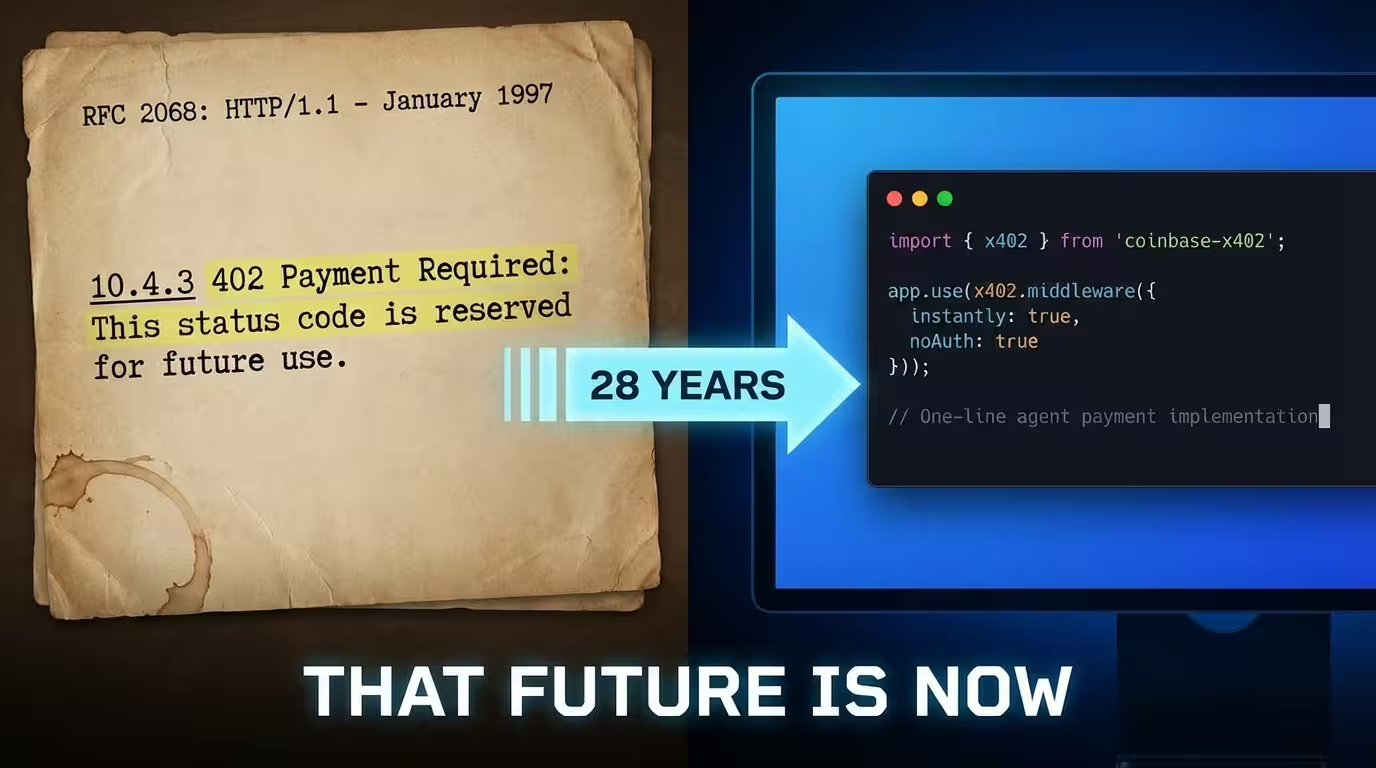
HTTP status code 402 has been sitting dormant in the protocol specification since 1997. "Payment Required—reserved for future use."
That future arrived in November 2025.
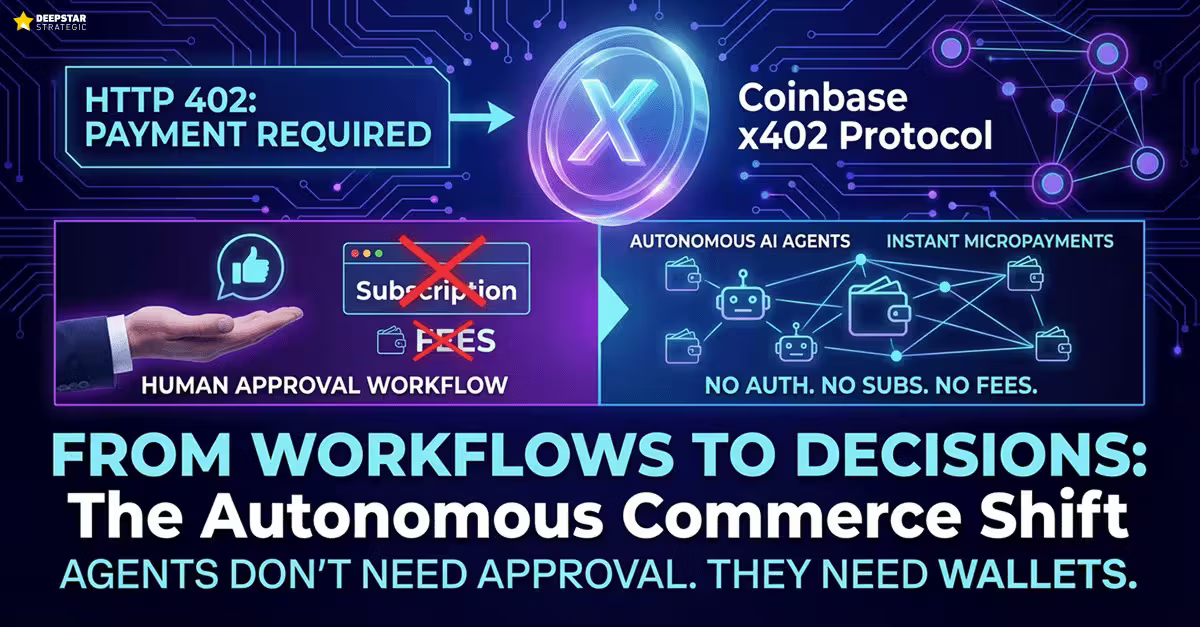
Coinbase shipped x402—a protocol that embeds instant micropayments directly into HTTP. One line of middleware code. No authentication. No subscriptions. No Stripe fees. Any API endpoint can now accept payments at sub-cent levels, instantly and frictionlessly.
That alone would be interesting infrastructure news for developers. But here's what most product leaders will miss: x402 enables programmatic payments. AI agents can now pay other AI agents autonomously—without human approval, without procurement workflows, without anyone pressing "confirm."
Read that again. Then consider what it means for every architectural assumption your SaaS product is built on.
While you're debating which AI features to ship next quarter, infrastructure is being deployed for machines to make purchasing decisions independently. This isn't a prediction about some distant AI future. It's live code you can deploy today.
This is the workflows-to-decisions shift happening at the protocol layer—and it accelerates every element of the Triple Squeeze.
Why This Matters More Than Another AI Feature Launch
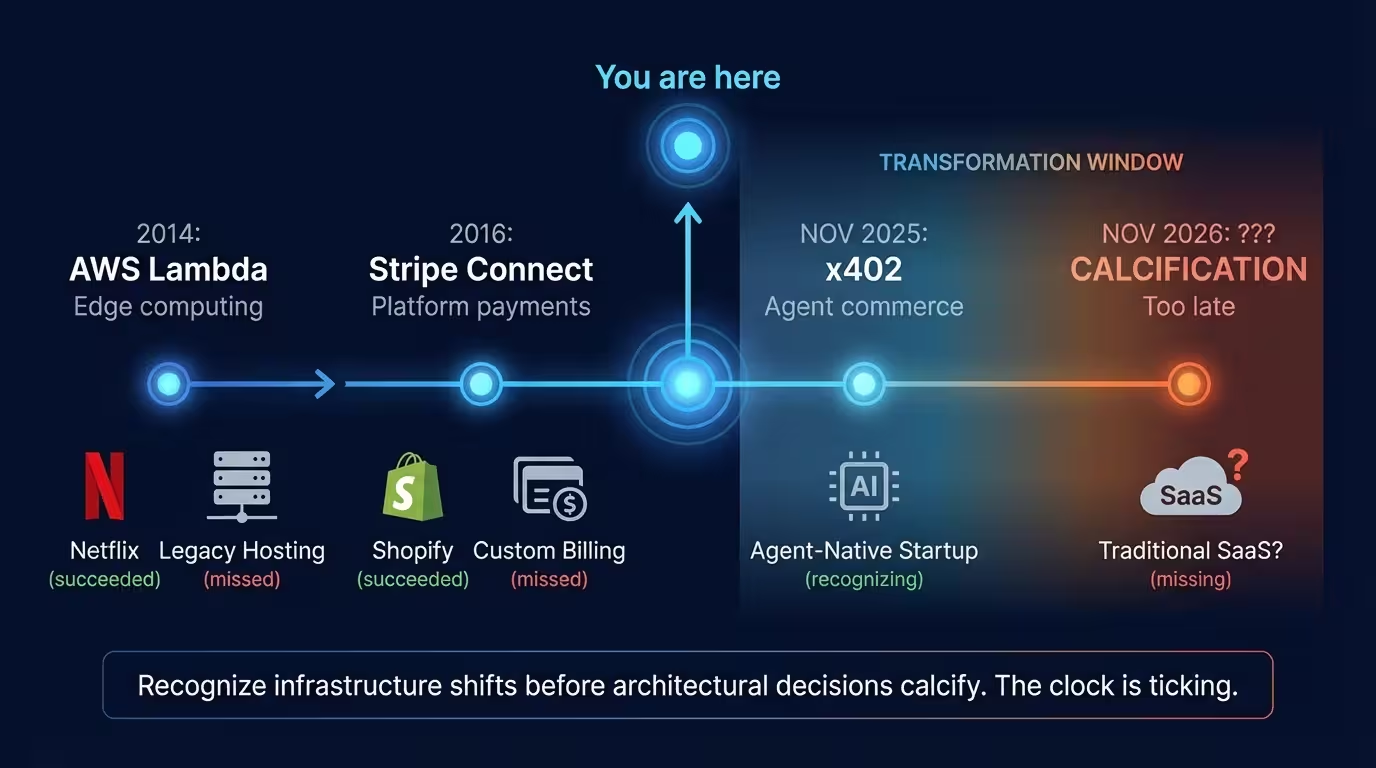
Most SaaS leaders will categorize x402 as "crypto infrastructure" or "payments innovation" and move on. That's the same mistake companies made when AWS launched Lambda in 2014 or when Stripe launched Connect in 2016.
The pattern is consistent: infrastructure primitives that seem like narrow technical innovations become platform foundations that reshape entire categories.
I've watched this pattern three times over 30 years. Microsoft didn't announce they were taking over desktop software—they shipped primitives until architectural decisions calcified. AWS didn't declare victory in cloud infrastructure—they released services until switching costs became prohibitive. By the time competitors recognized the pattern, migration economics made transformation irrational.
x402 is that kind of primitive.
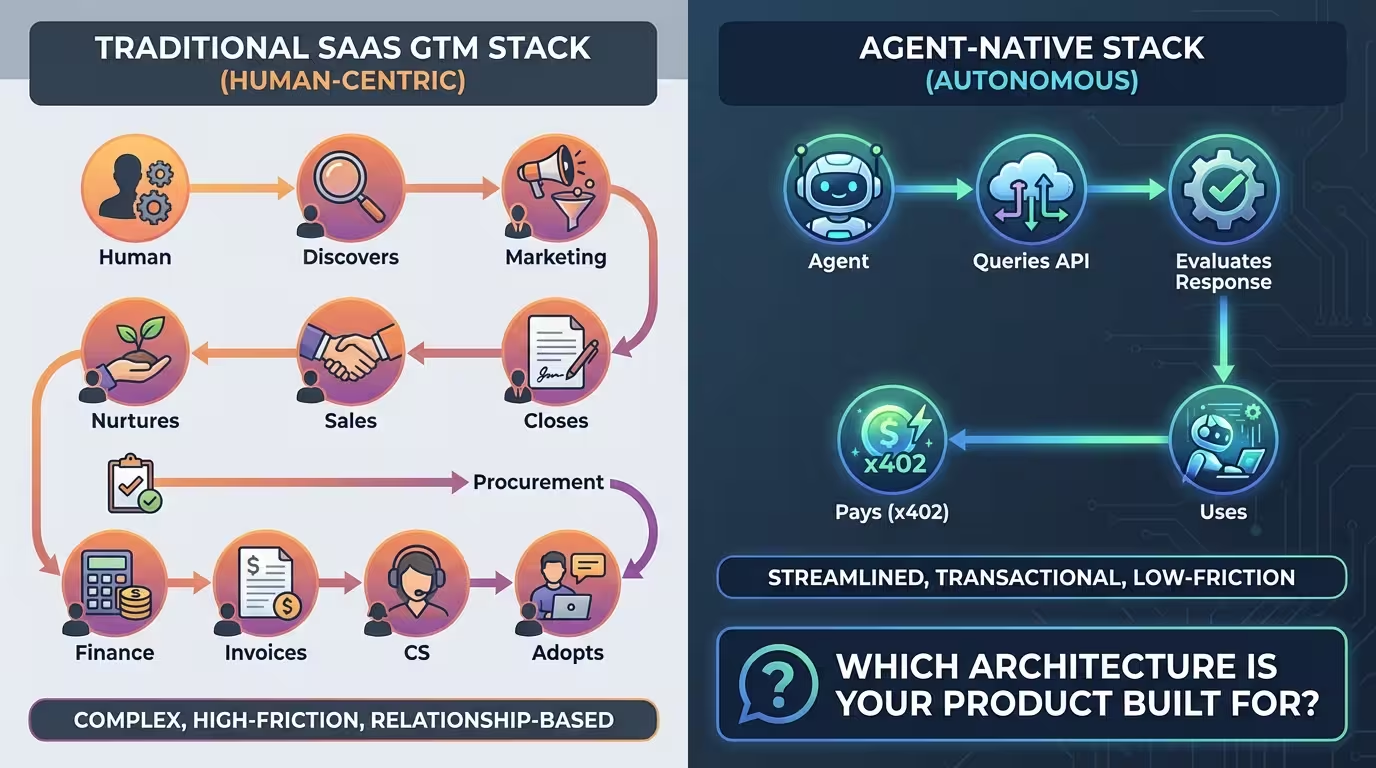
Here's the strategic significance: when payment infrastructure becomes agent-native, the entire SaaS distribution and monetization stack gets rebuilt for autonomous buyers.
| Traditional SaaS Architecture | Agent-Native Architecture |
|---|---|
| Human discovers product | Agent identifies capability need |
| Marketing nurtures through funnel | Agent queries capability APIs |
| Sales qualifies and closes | Agent evaluates response quality |
| Procurement approves budget | Agent pays per-request instantly |
| Finance processes invoice | Transaction settles in milliseconds |
| Customer Success drives adoption | Agent optimizes usage autonomously |
Every layer of your go-to-market stack assumes a human is making purchasing decisions. x402 makes that assumption optional.
Four Architectural Assumptions x402 Breaks
The strategic implications become clearer when you examine which architectural decisions x402 invalidates.
Assumption 1: Human Approval Bottlenecks Create Value
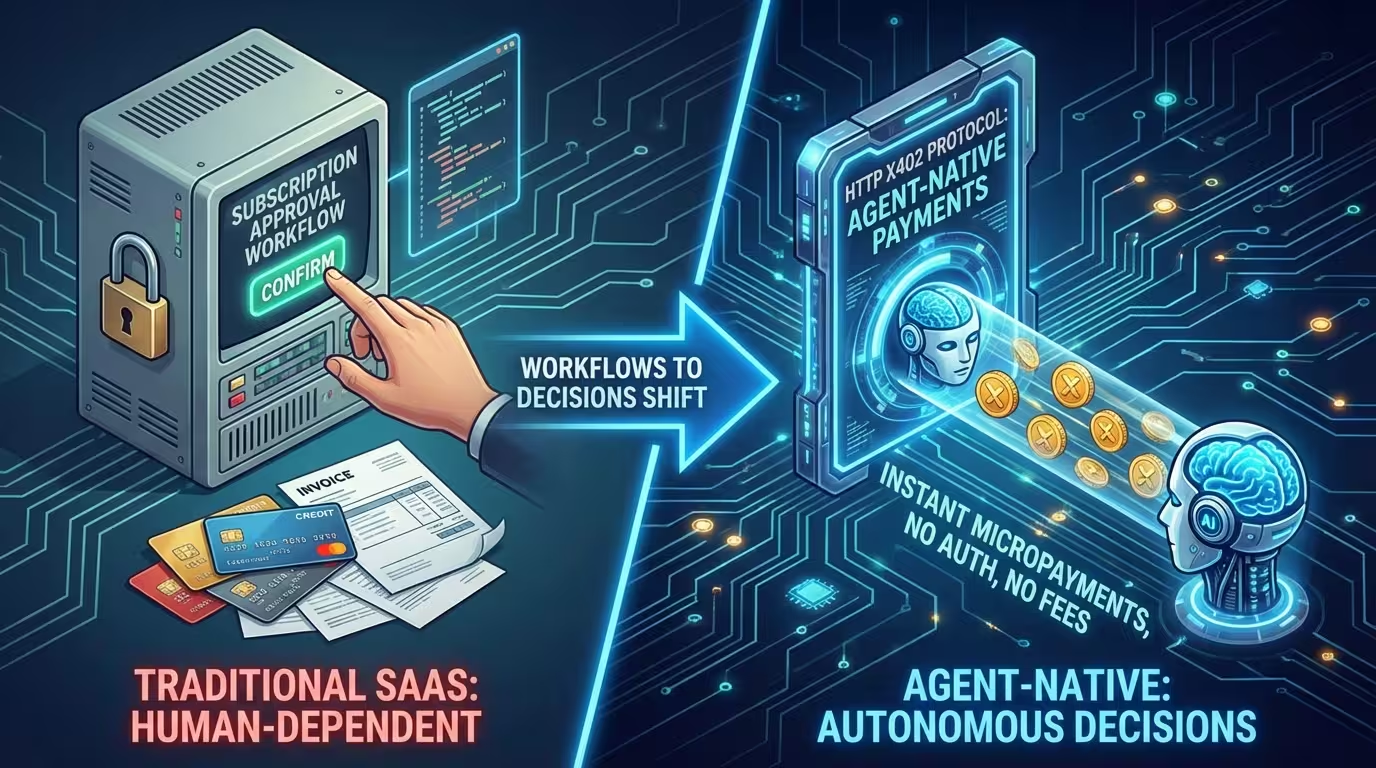
Traditional SaaS monetization depends on friction. Not arbitrary friction—strategic friction that creates switching costs, enables relationship building, and justifies premium pricing.
OAuth flows. Credit card verification. Account creation. Contract negotiation. Procurement approval. Each step adds friction, but that friction serves business purposes: customer identification, payment security, revenue predictability, relationship deepening.
x402 makes all of that friction optional.
An AI agent using x402-enabled services doesn't need an account. Doesn't need OAuth. Doesn't need procurement approval. It hits an API endpoint, receives a 402 response, pays instantly via cryptocurrency, and gets the response. Transaction complete. No relationship required.
For SaaS companies built on relationship-based selling, this is existential architecture risk disguised as payments innovation.
The companies most vulnerable are those whose value proposition depends on the buying process itself—enterprise software with complex implementation, products that require training, solutions that benefit from customer success relationships. When agents can procure capabilities transactionally, the relationship layer becomes overhead rather than value.
Assumption 2: Subscription Models Capture Maximum Value
The entire SaaS business model is built on recurring revenue from subscriptions. Annual contracts. Monthly payments. Usage tiers with minimum commitments.
This model works when:
- Switching costs are high
- Value requires ongoing relationship
- Usage is predictable enough to price in advance
- Buyers are humans who prefer budgetary predictability
x402 enables true pay-per-request economics at sub-cent granularity. When agents can pay one-tenth of a cent per API call with zero transaction overhead, subscription bundles become friction rather than value.
Consider the implications for AI-native competitors who are already achieving 100%+ growth rates versus traditional SaaS at 23%. They're not burdened by subscription infrastructure. They can architect for transactional models from day one—charging exactly for value delivered, scaling linearly with agent usage, capturing revenue from autonomous buyers.
| Monetization Model | Human Buyer Fit | Agent Buyer Fit | x402 Compatibility |
|---|---|---|---|
| Annual subscription | High | Low | Poor |
| Monthly subscription | High | Low | Poor |
| Usage-based (metered) | Medium | Medium | Moderate |
| Pay-per-request | Low | High | Native |
| Outcome-based | Medium | High | Optimal |
Traditional SaaS companies optimizing subscription economics are optimizing for human buyers while agent-native infrastructure emerges underneath them.
Assumption 3: Authentication Is a Moat
Enterprise SaaS companies invest heavily in authentication infrastructure. Single sign-on integrations. Identity management. Role-based access control. API key management. OAuth flows.
This infrastructure serves legitimate security purposes. But it also creates switching costs. Once a customer has integrated your authentication into their identity stack, migration becomes expensive.
x402 routes around authentication entirely for transactional interactions.
An agent doesn't need an account to pay for an API response. The payment is the authentication—the cryptographic transaction proves the agent has authority to spend from that wallet. No API keys to manage. No OAuth tokens to refresh. No identity systems to integrate.
For SaaS companies whose competitive position depends partly on authentication lock-in, x402 represents competitive surface area they hadn't considered defending.
Assumption 4: Human Interface Is The Interface
SaaS companies invest millions in user experience. Intuitive dashboards. Elegant workflows. Delightful interactions. The logic is sound: when humans choose software, interface quality influences purchasing decisions.
But "interface" is evolving. We've already lived through this progression: command lines gave way to GUIs, then web interfaces, then mobile interfaces, then APIs for machine-to-machine communication. Each shift didn't eliminate the previous layer—it added a new interface that captured a new category of buyer.
Agent-addressable interfaces are the next layer. And for autonomous buyers, they're the only layer that matters.
An agent buying capabilities through x402 never sees your dashboard. It queries an API, evaluates the response quality, pays for what works, and moves on. Your carefully crafted navigation, your thoughtfully designed information hierarchy, your pixel-perfect visual polish—none of it registers with an autonomous buyer.
The companies most at risk aren't those with bad human interfaces—they're those with only human interfaces. If your product is a beautiful dashboard on top of inaccessible data and logic, agents will route around you entirely. Your human UI becomes just one of many possible frontends—and not the one capturing the fastest-growing buyer category.
The question shifts from "does this have the best dashboard?" to "is this the system easiest for agents to choreograph?" Products that invested in clean APIs, well-defined schemas, and agent-addressable state will capture autonomous buyers. Products that invested only in screens built for one interface layer while the market added another.
The Compounding Effect on the Triple Squeeze
x402 doesn't create new competitive threats. It accelerates the three threats already compressing SaaS companies.
Acceleration 1: AI-Native Competitive Advantage Widens
AI-native startups already hold a 4.3x growth advantage over traditional SaaS. They're architected for decisions from day one—unified data models, inference-first design, outcome-based value delivery.
x402 gives them native monetization infrastructure for agent buyers.
While traditional SaaS companies retrofit their subscription billing for usage-based models, AI-native competitors can ship agent-native monetization from launch. They capture revenue from autonomous buyers that traditional SaaS products can't even recognize as customers.
The architectural gap compounds. Traditional companies have one more layer to transform while competitors ship on native infrastructure.
Acceleration 2: Customer DIY Gets Easier
Your customers are already vibe-coding replacements using Cursor and Lovable. x402 removes another barrier.
Previously, even if a customer could prototype your core workflow in 48 hours, monetizing that internal tool required payment infrastructure complexity. Stripe integration. Subscription management. Invoice processing. The operational overhead of running a service exceeded the development cost.
With x402, a customer's internal agent can sell capabilities to other agents with one line of middleware code. The bar for turning internal tools into services drops from "dedicated engineering effort" to "afternoon project."
Every workflow your product optimizes becomes a potential agent service your customer could offer themselves—or that an AI-native startup could offer at commodity pricing.
Acceleration 3: Platform Learning Gets Financial Signal
Platform providers already learn your workflows from API call patterns. They see which prompts generate the most usage, which response patterns correlate with customer value, which workflows represent high-revenue opportunities.
x402 adds financial signal to that intelligence.
When agents pay per-request, platform providers see not just what's being requested but what it's worth. Price discovery happens automatically. The market reveals which capabilities command premium pricing and which are commoditized.
This accelerates the learn/build/obsolete pattern. Platform providers don't just see what workflows to copy—they see which workflows to prioritize based on revenue potential.
The 12-Month Architecture Decision Window
The pattern from previous platform consolidation cycles holds: you have 12-18 months to recognize infrastructure shifts and transform before architectural decisions calcify.
x402 launched in November 2025. Developer adoption is early. Agent-to-agent commerce is experimental. Most SaaS companies haven't noticed.
That's exactly the position you don't want to be in 18 months from now.
The companies that thrived through previous cycles—Snowflake architecting for multi-cloud before AWS lock-in became expensive, MongoDB maintaining open-source while offering managed services—recognized infrastructure shifts early and transformed while economics favored change.
The companies that waited until the threat was obvious—pure AWS marketplace vendors, Google-dependent publishers, Microsoft-only productivity tools—got acquired at fractions of their potential value or shut down entirely.
The Strategic Assessment for Your AI Roadmap
Three questions to ask your product and engineering leadership:
1. Can an autonomous agent purchase your product's capabilities today?
If the answer is "no, they'd need to create an account / go through procurement / authenticate via OAuth," you're architecturally dependent on human buyers. That's not inherently wrong, but it's a strategic choice you should make consciously.
2. What percentage of your product's value requires human judgment versus delivers answers or decisions?
Capabilities that deliver answers (search, summarization, classification) are transactionally purchasable. Capabilities that require ongoing human judgment (complex decision support, relationship-intensive processes) retain subscription value. Map your feature portfolio against this spectrum.
3. If your largest customer's AI agent could pay per-request for your core capability, what would that cost—and would they prefer it?
Run the math. Annual contract value divided by estimated usage. Compare to per-request pricing you'd need to offer. If transactional pricing is dramatically cheaper for the customer, you're vulnerable to competitors who offer it.
Are You Building Copilots or Captains?Are You Building Copilots or Captains?
Assess whether your AI features optimize workflows anyone can copy or own decisions only you can make.
What This Means for Your AI Strategy
x402 is infrastructure—not product strategy, not competitive threat, not immediate revenue opportunity.
But infrastructure shapes what products become possible.
The companies that recognized cloud infrastructure implications early built Salesforce, not on-premise CRM software. The companies that recognized mobile infrastructure implications built Instagram, not desktop photo editors. The companies that recognized API infrastructure implications built Stripe, not payment processing software.
x402 is infrastructure for agent commerce. The products that become possible on this infrastructure will look different from products built assuming human buyers.
The question isn't whether to adopt x402 specifically. It's whether your AI strategy accounts for a world where autonomous agents can purchase capabilities transactionally—and whether your architecture can serve those buyers profitably.
Most SaaS companies are building copilot features that help humans work faster. Agent-native companies are building captain systems that make decisions and transact autonomously.
When agents got wallets, that distinction stopped being philosophical and became architectural.
The transformation from workflows to decisions just accelerated. Your 12-month window is already running.
Let's Discuss Your AI StrategyLet's Discuss Your AI Strategy
30-minute discovery call to explore your AI transformation challenges, competitive positioning, and strategic priorities. No pressure—just a conversation about whether platform independence makes sense for your business.
Dive deeper into the state of SaaS in the age of AI
Understand the market forces reshaping SaaS—from platform consolidation to AI-native competition
 The State of SaaS in the Age of AIThe Constraint Nobody's Modeling
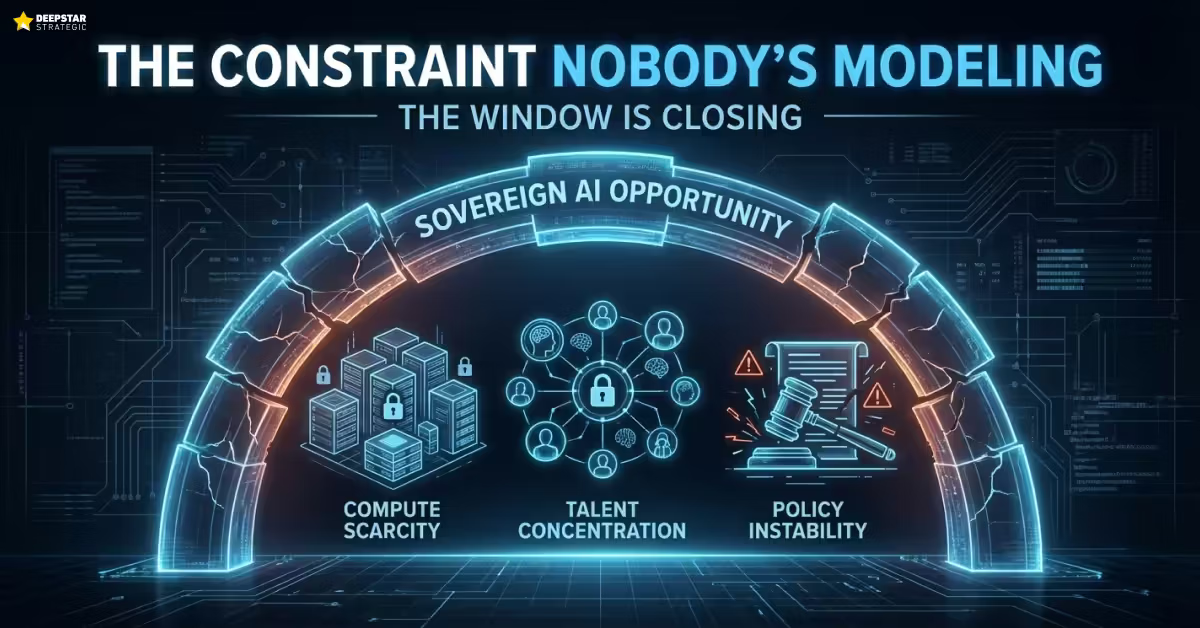
Every AI sovereignty strategy makes the same assumption: when you're ready to build independence, the resources will be available. Analyze the economics and you'll find that assumption is wrong. Compute is concentrating. Talent is concentrating. Policy is unstable. The window is closing.
 Andrew Hatfield
December 9, 2025
 The State of SaaS in the Age of AIThe Dependency Architecture Being Built for Allies
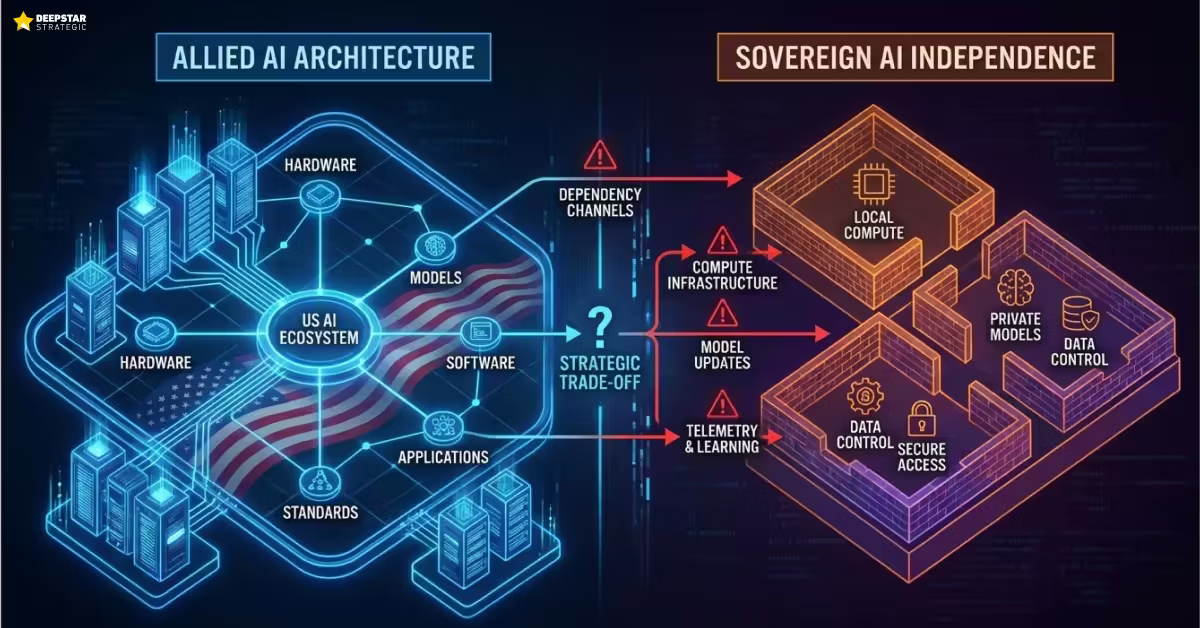
OpenAI's 'sovereign deployment options' sound like independence. The US government's AI Action Plan describes these as partnerships. Read the actual documents and you'll find explicit language about 'exporting American AI to allies.' That's not a sovereignty framework—it's a dependency architecture with better PR.
Andrew HatfieldDecember 9, 2025
 The State of SaaS in the Age of AIWhat National AI Strategy Teaches SaaS Companies
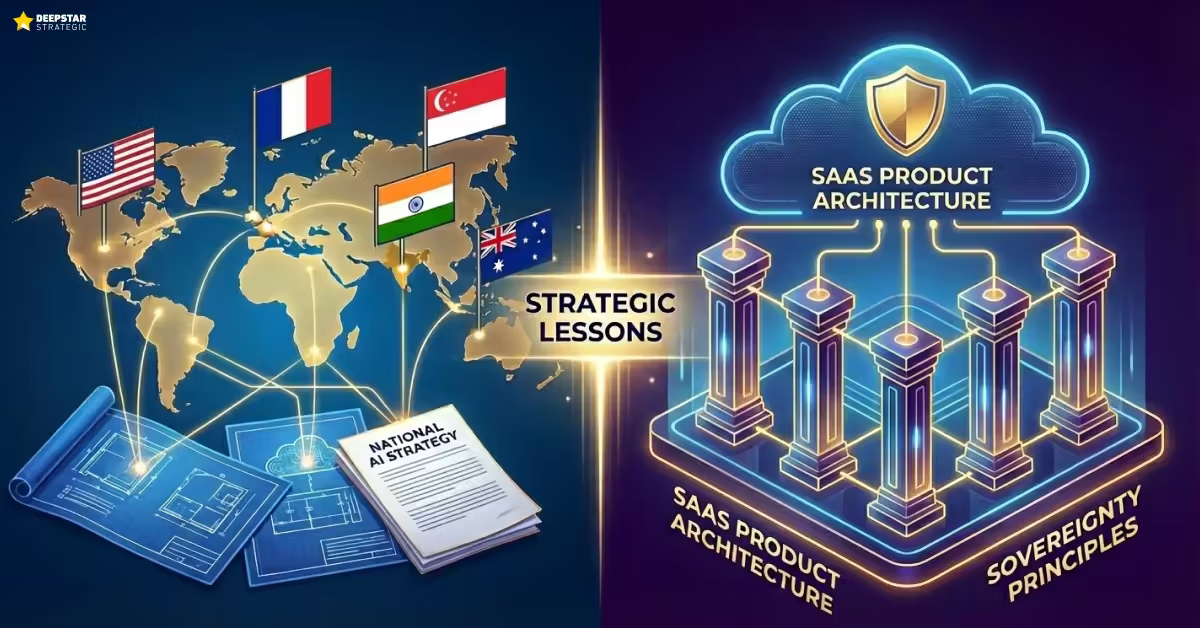
France, Singapore, India, and the UK collectively spent tens of millions developing AI sovereignty strategies. The conclusions are public. They translate directly to your product architecture decisions. Most SaaS product teams haven't read a single one.
Andrew HatfieldDecember 9, 2025
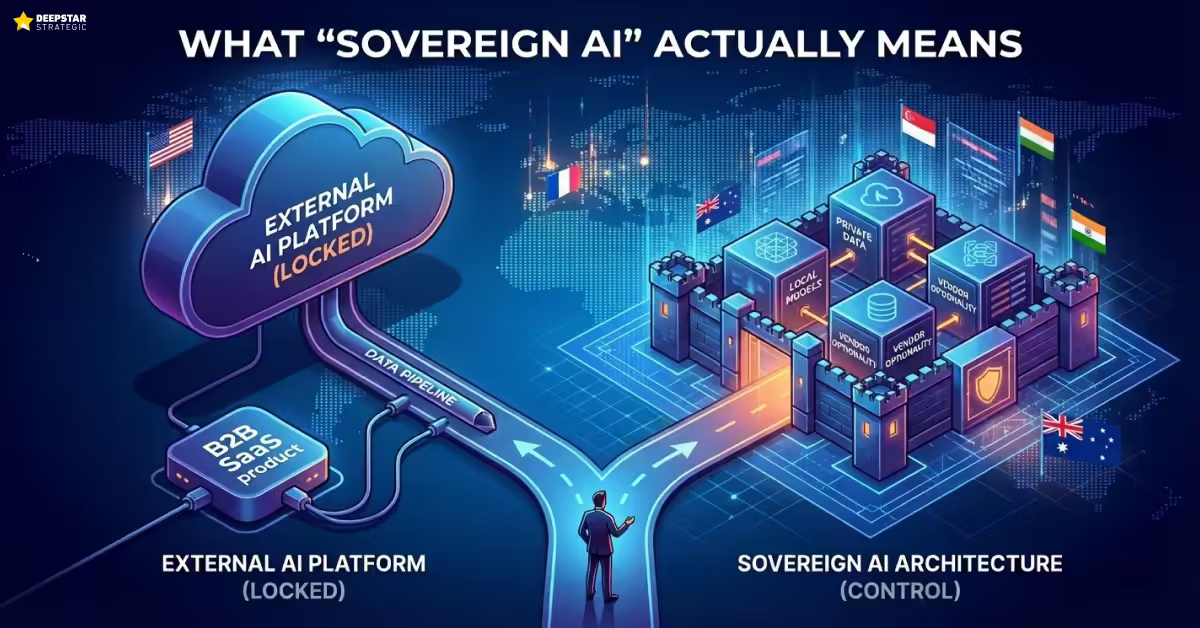 The State of SaaS in the Age of AIWhat 'Sovereign AI' Actually Means for Your Product Strategy
France is spending €109 billion on AI infrastructure. Singapore admits GPUs are in short supply and they face 'intense global competition' to access them. Your product team is debating whether to increase OpenAI API spend by 20%. These aren't different conversations—they're the same conversation at different scales.
Andrew HatfieldDecember 9, 2025