
Own Decisions. Control Costs. Build Moats.
Learn how B2B SaaS companies are shifting from workflow optimization to decision ownership—identifying which decisions to own, reducing platform dependency, and turning proprietary data into defensible advantages.

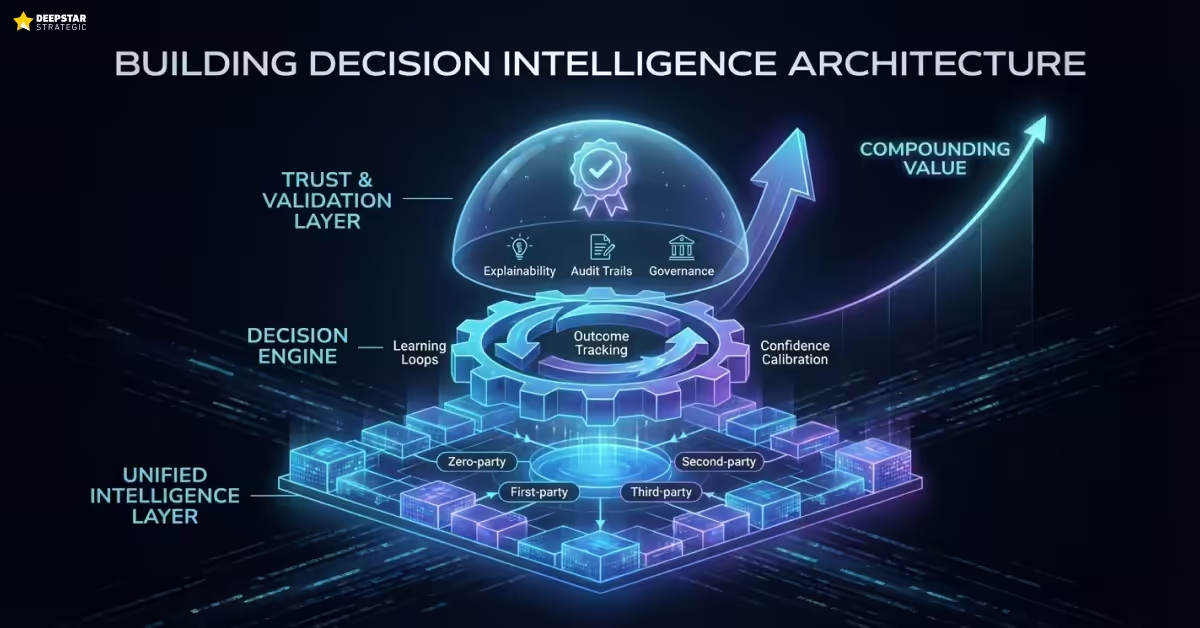
Decision Intelligence Architecture
Building Decision Intelligence: The Architecture That Separates Winners From Case StudiesDec 4, 2025
Most AI implementations fail at the architecture layer, not the model layer. Here's the three-layer framework that separates decision systems that compound from features that plateau.
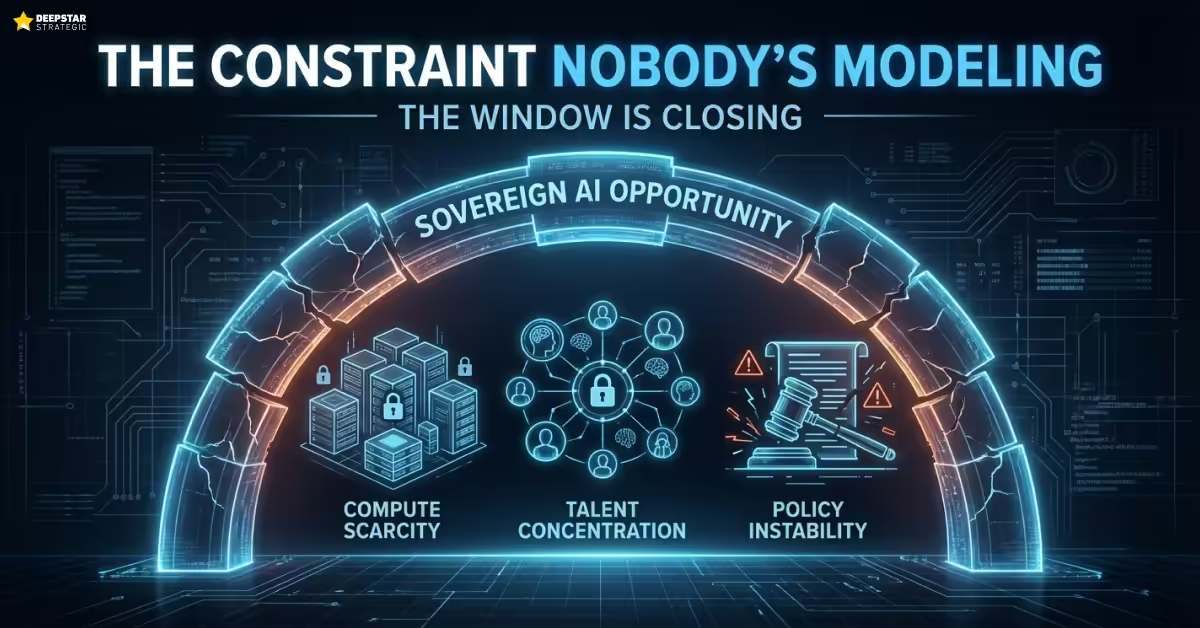
Every national AI strategy assumes that when they're ready to build sovereignty, the compute, talent, and stable policy environment will be available. That assumption is wrong—and it applies to your product architecture too.

The US AI Action Plan explicitly states the goal: 'Export its full AI technology stack to all countries willing to join America's AI alliance.' That's not sovereignty for allies—it's dependency creation.
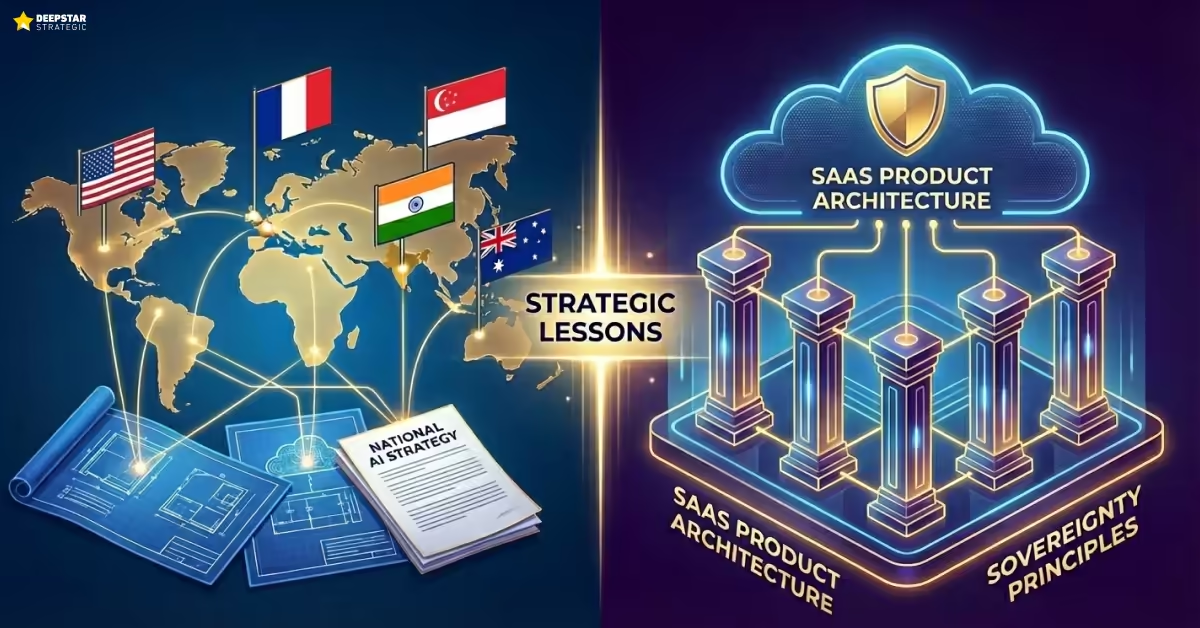
Cross-analyzing seven national AI strategies reveals six consistent principles—not because governments coordinate, but because they're all solving the same dependency problem you face.
The State of SaaS in the Age of AI
AI Sovereignty
How national AI sovereignty strategies reveal architectural principles that B2B SaaS companies should apply to their own AI strategy.

Platform Power at Scale
Nations spending billions on AI sovereignty have recognized something most SaaS product teams haven't: dependency on external AI platforms isn't a vendor management issue—it's an architecture decision that determines your competitive future.
Every national AI strategy assumes that when they're ready to build sovereignty, the compute, talent, and stable policy environment will be available. That assumption is wrong—and it applies to your product architecture too.
The US AI Action Plan explicitly states the goal: 'Export its full AI technology stack to all countries willing to join America's AI alliance.' That's not sovereignty for allies—it's dependency creation.
Cross-analyzing seven national AI strategies reveals six consistent principles—not because governments coordinate, but because they're all solving the same dependency problem you face.
AI Strategy Under Pressure
The Triple Squeeze facing B2B SaaS companies: AI-native competitive pressure, customer DIY through vibe coding, and platform provider consolidation. Three compounding threats that accelerate each other.
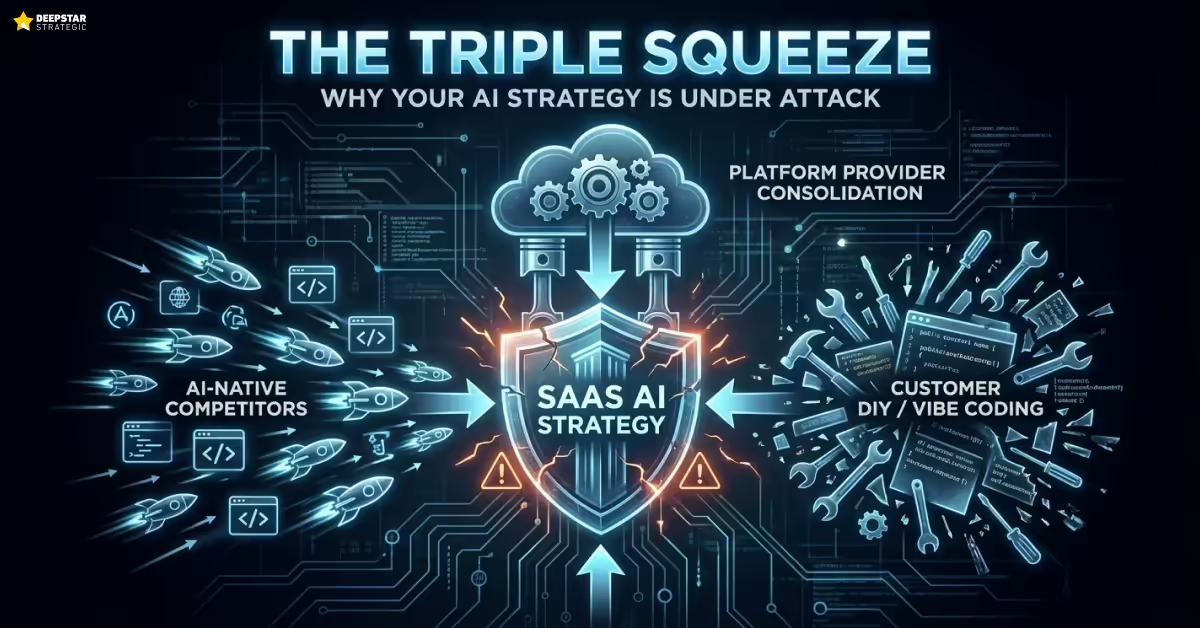
The Triple Squeeze
Your board asked last quarter what makes your AI defensible. You shipped six new AI features since then. The answer is still unclear.
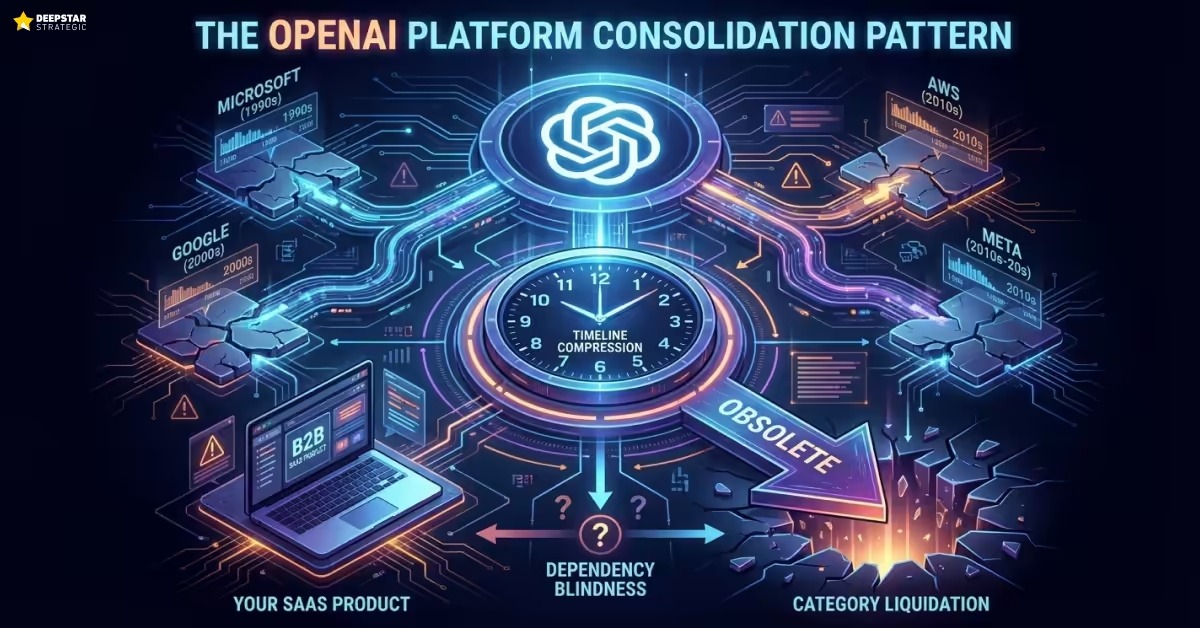
Platform Consolidation Pattern
The OpenAI Platform Consolidation Pattern: Learning From Microsoft, AWS, and MetaNov 17, 2025
OpenAI isn't doing anything new—they're running the exact playbook that destroyed independent software companies three times before. The only difference is speed.
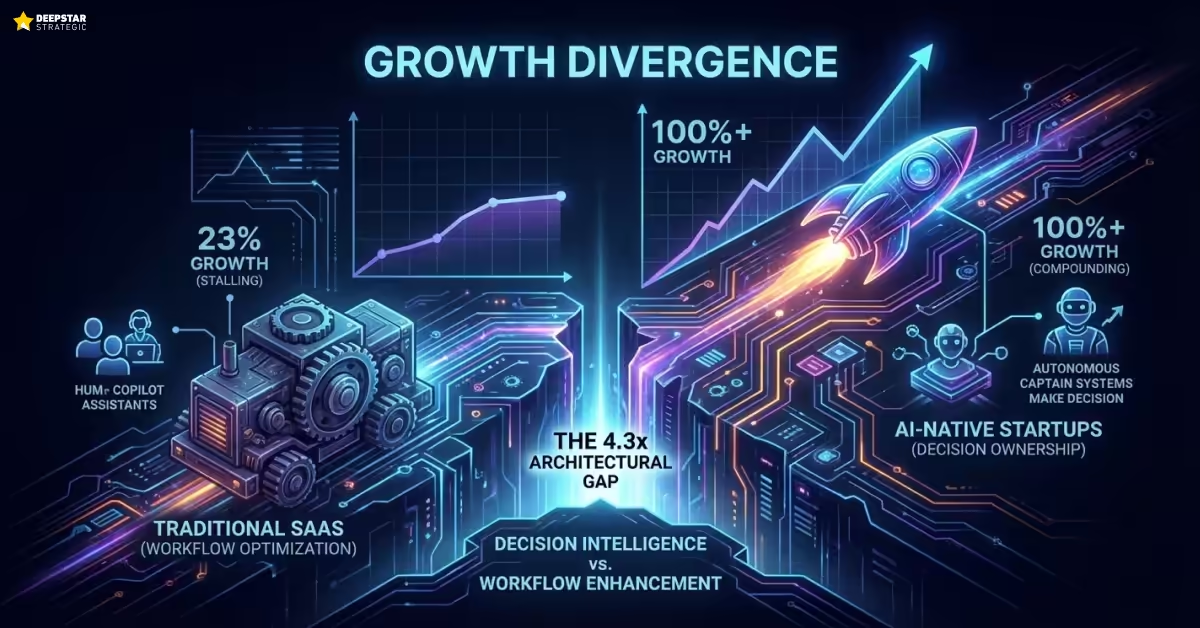
AI-Native Competitive Pressure
AI-Native Startups Are Growing 100%+ While Traditional SaaS Stalls at 23%—Here's WhyNov 16, 2025
The 4.3x growth advantage AI-native startups hold over traditional SaaS isn't about feature velocity or funding. It's about decision ownership built into architecture from day one.
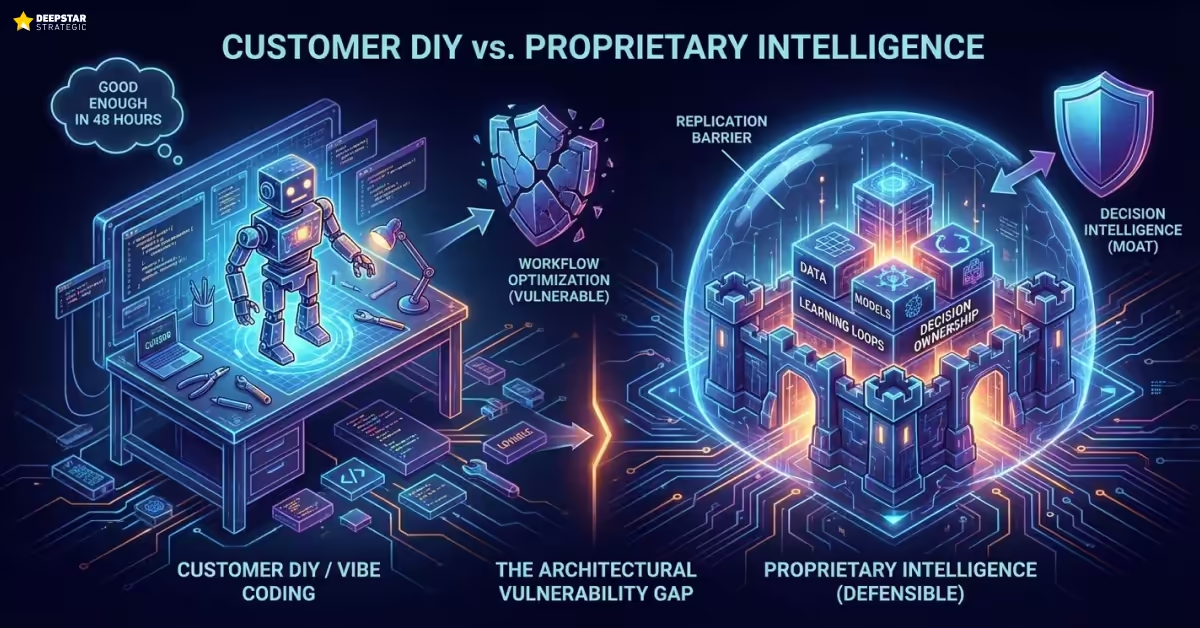
The Triple Squeeze
Why Your Customers Are Vibe Coding Replacements With Cursor and LovableNov 16, 2025
Your customers aren't waiting for your roadmap anymore. They're building good enough replacements in hours, not months—and your workflow-first architecture is why.
More Insights
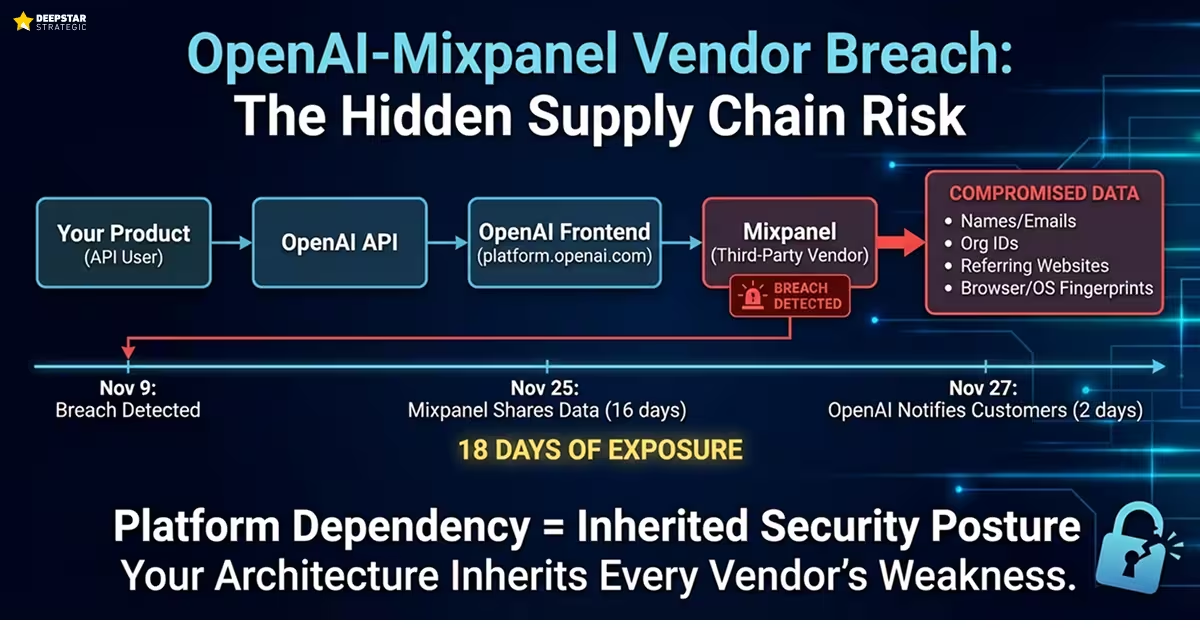
Platform Consolidation Pattern
The Security Cost of Platform Dependency: What the OpenAI/Mixpanel Breach Reveals About Inherited RiskNov 27, 2025
OpenAI says the Mixpanel breach wasn't their breach. Technically correct. Strategically irrelevant. Your architecture inherits every weakness in your vendor's supply chain.

Emerging Infrastructure
When AI Agents Got Wallets: Why x402 Changes Everything About Your SaaS ArchitectureNov 27, 2025
HTTP status code 402 has been 'reserved for future use' since 1997. That future arrived this month—and it breaks three architectural assumptions your SaaS product depends on.

Why the trust gap between sales and marketing kills SaaS growth—and how top teams align with joint pipeline retros.
From AI Features to AI Transformation
Transformation Playbook
The architecture shift from AI features to AI transformation—and how to assess whether you're building defensible advantages.
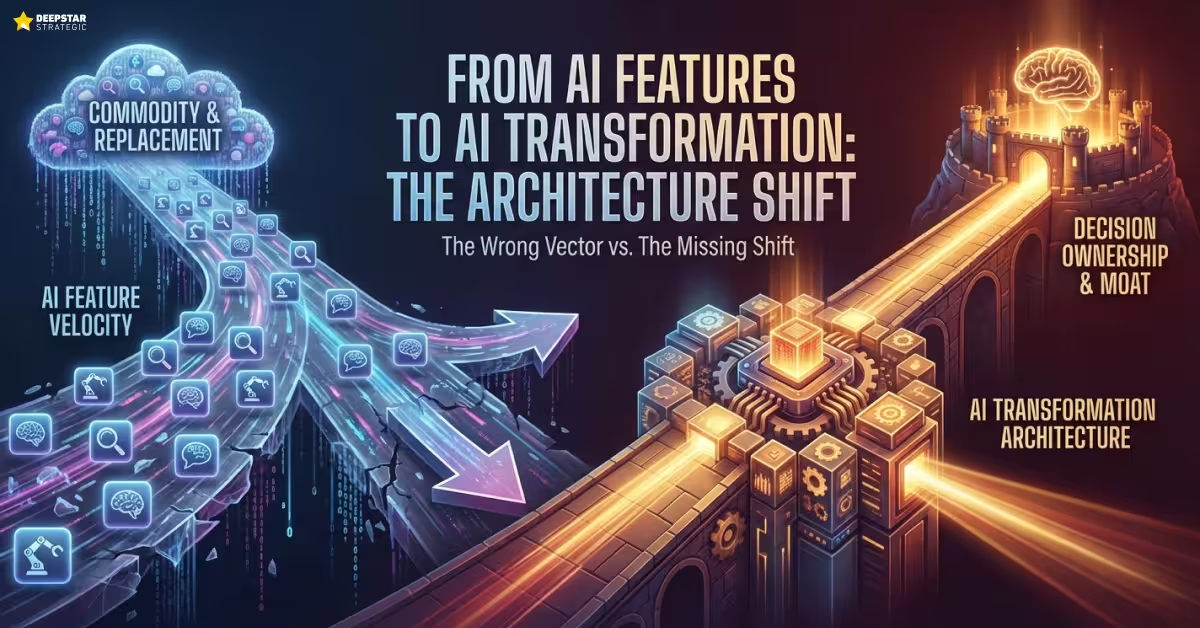
From Features to Transformation
Most SaaS companies think AI transformation means adding AI features. They're optimizing the wrong vector—and the faster they ship, the faster they train their replacement.
More Insights
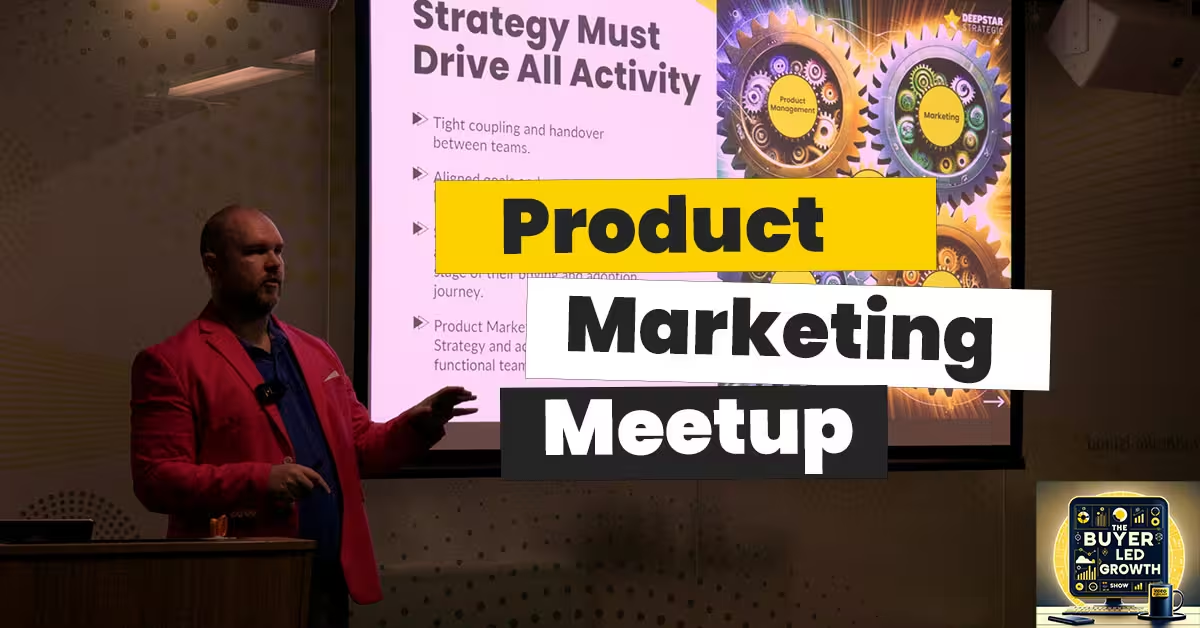
Buy vs Build Strategy
Balancing Buy vs Build for Enterprise B2B SaaS: Live from Brisbane's Product Marketing Alliance MeetupMay 7, 2024
Why buy vs build is shifting in enterprise SaaS and how modular integration drives 120% ACV growth.
Why modular platforms are reshaping B2B SaaS growth—solving bounded problems instead of selling feature factories.
Segmentation & ACV Growth
Segmentation driving 120% increase in ACV with rapid expansion revenueApr 9, 2024
How Shippit achieved 120% ACV growth by refining segmentation and selling modules instead of monoliths.

How Rokt triples growth by making focused bets on modular platforms instead of building monolithic feature factories.
Building Decision Intelligence Systems
Decision Intelligence Playbook
How to build AI systems that own decisions and compound advantage—from architecture patterns to defensibility diagnostics.
Decision Intelligence Architecture
Most AI implementations fail at the architecture layer, not the model layer. Here's the three-layer framework that separates decision systems that compound from features that plateau.
More Insights

Leadership & Growth
From Team Member to CEO: Patrick Coghlan's Blueprint for Leadership and Market GrowthApr 16, 2024
How integrating sales feedback with product telemetry drives precision development and enterprise growth at CreditorWatch.

Growth Transformation
Old Dog, New Tricks: Mastering Double-Digit Growth for a 25 year old SaaSApr 2, 2024
How a 25-year-old SaaS company drives double-digit growth through first-party buyer insights and Product-GTM alignment.